
About
We separatewhat is knownfrom what isassumed.
Sales figures show what sold. They do not show what would have happened if you had chosen differently.
First we work out what the information you have can show and what it cannot. Then we choose the kind of work: Intelligence publishes what is happening and Research tests what today’s data cannot answer. A third, the tested method, is a method that has passed its tests.
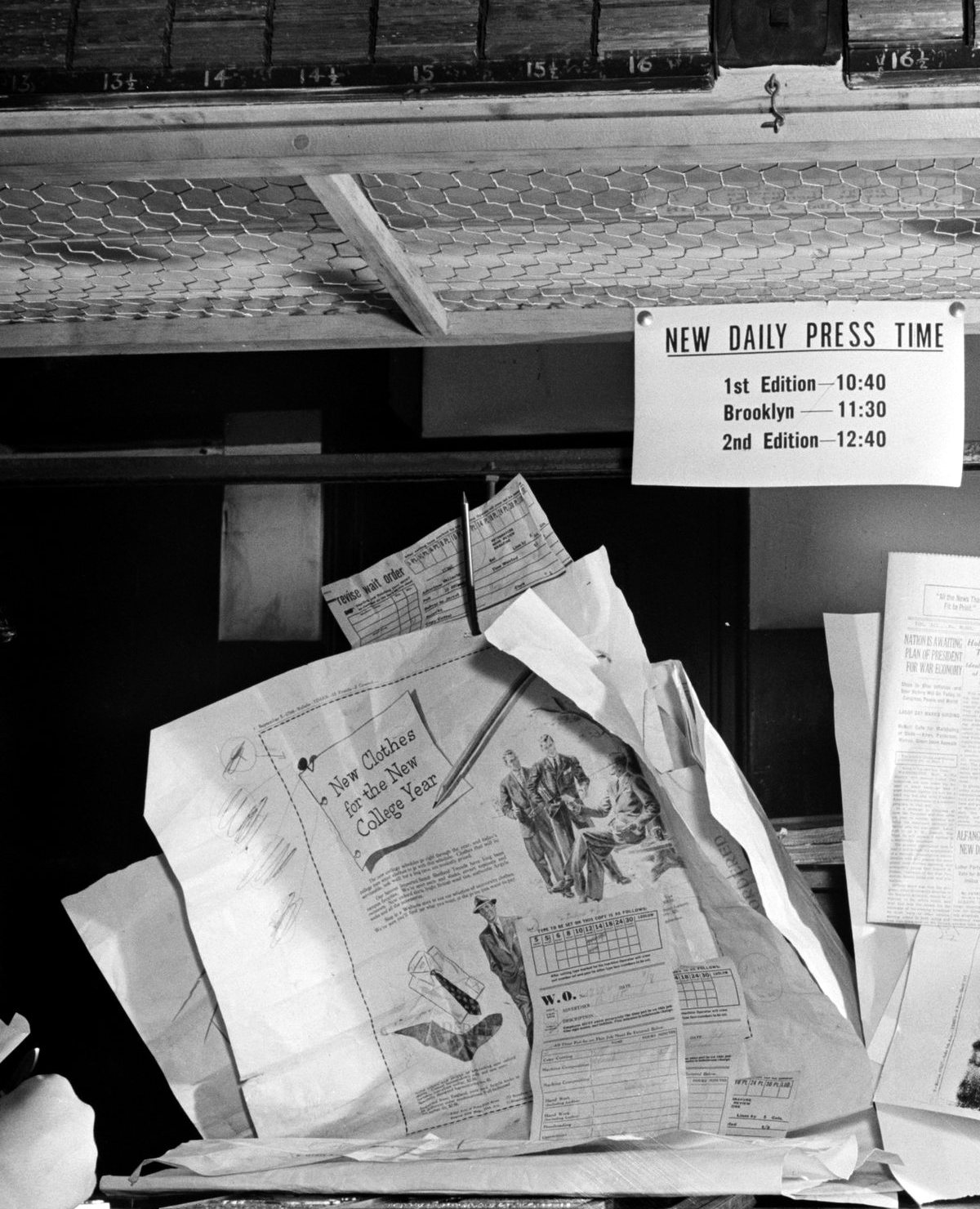
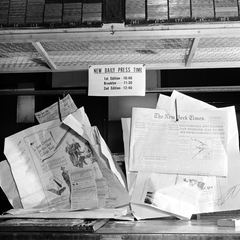
Marjory Collins. New York Times composing room, 1942. Library of Congress.
How we check our work
You can check how wereached every conclusion.
You can check our sources.
Every essay lists its sources. When an essay predicts something, it names the date the prediction can be checked, and we check it then and publish the result. A wrong prediction stays on the record. Client conclusions are graded in private.
We do not sell what we have not proved.
A method that has not passed its test stays labeled as research, however much a client wants it to work.
Paying us does not change the answer.
A client pays us to examine a decision. The conclusion follows the evidence, including when it says the decision was the wrong one.
Private people stay private.
We write about public figures, companies and institutions, using public information.
A person signs every conclusion.
AI helps us work faster, examine more material and test more possibilities. A person checks each finding against its source and signs each conclusion. No photograph of a person on this site is AI-generated.
How we use AI
AI is a tool we run. It is not what we sell and it is not the center of the work. We use it to work faster, examine more material and test more possibilities. It does not decide what a finding means and it does not sign anything. A person checks each finding against its source and signs each conclusion. Every finding is something we read in a source or saw in a test, and we label anything we work out from those. No photograph of a person on our site is AI-generated, and any generated image is labeled in the credits.
Founder
The founder has facedthese decisions himself.
Manu Parés
Founder
Fifteen years in brand partnerships, licensing and talent: marketing at Perry Ellis, licensing and collaborations at Banana Republic, partnerships and collaborations at Gap, and at ONE Management, where he built the creator and influencer division and left in 2026 as Director, Talent & Engagers | Strategic Partnerships. In those jobs the decisions came with money attached: what to make, what to charge, where to sell, who to partner with. Culture-Watch examines those choices before the money is spent, with the evidence and uncertainty in view.
Rights and credit

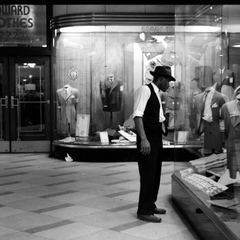
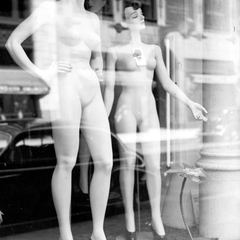
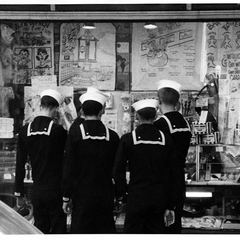
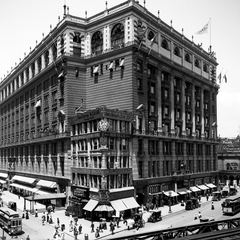
The contents of the Library of Congress Farm Security Administration / Office of War Information Black-and-White Negatives are in the public domain and free to use and reuse. Verified per item against its catalogue record on 27 September 2026.
Credit line for publication: Library of Congress, Prints & Photographs Division, Farm Security Administration/Office of War Information Black-and-White Negatives.
The other Library of Congress collections used here (the Anthony Angel collection of Angelo Rizzuto’s photographs, Bernard Gotfryd, Harris & Ewing, National Photo Company, Bain News Service, Detroit Publishing Co. and the Carol M. Highsmith Archive) are marked “No known restrictions on publication” in their catalogue records. Images from The Metropolitan Museum of Art are Open Access (CC0).
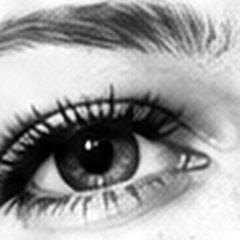
One image is not a photograph: the eye on the Home opening is a detail from our approved moodboard, which was generated. It shows no identifiable person.
No photograph here depicts a person generated by a model. Where a catalogue record names a private individual, the record is kept and the name is not printed on the page. A face runs with its source and date, never with a claim about the person in it.
Every photograph, with its record30
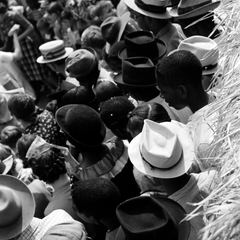
- 01Russell Lee. Crowley, Louisiana, 1938.[Untitled photo, possibly related to: Detail of crowd watching street dance, National Rice Festival, Crowley, Louisiana]Library of Congress, FSA/OWI. No known restrictions.
- 02Angelo Rizzuto. New York, 1957.[Woman adjusting sunglasses]Library of Congress, Anthony Angel Collection. No known restrictions on publication.
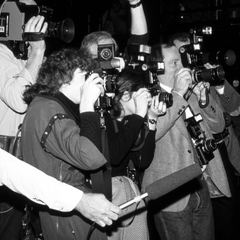
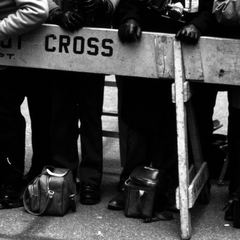
- 03Bernard Gotfryd. New York, 1970 to 1990.[Press photographers, New York City]Library of Congress, Bernard Gotfryd collection. No known restrictions on publication.
- 04Detail from the approved moodboard (generated; shows no identifiable person).Eye detail from the approved moodboard (26 September 2026)Generated image, Culture-Watch moodboard, 26 September 2026.
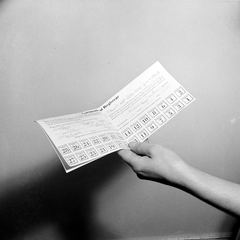
- 05Marjory Collins. 1942.Sugar rationing card showing stampsLibrary of Congress, FSA/OWI. No known restrictions.
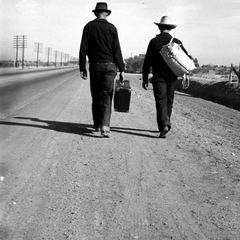
- 06Dorothea Lange. California, 1937.Toward Los Angeles, CaliforniaLibrary of Congress, FSA/OWI. No known restrictions.
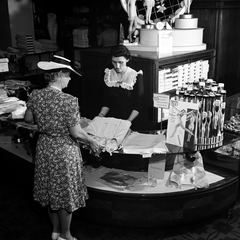
- 07Arthur S. Siegel. Detroit, Michigan, 1941.Detroit, Michigan. Corset department at the Crowley-Milner department storeLibrary of Congress, FSA/OWI. No known restrictions.
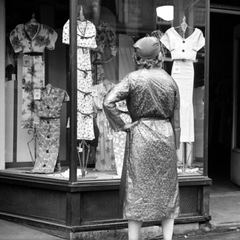
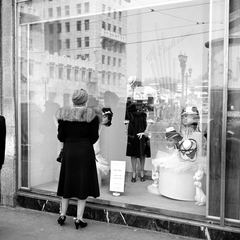
- 08Edwin Locke. Manchester, New Hampshire, 1937.Window shopping, Manchester, New HampshireLibrary of Congress, FSA/OWI. No known restrictions.
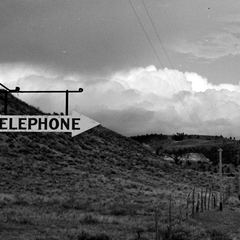
- 09Marion Post Wolcott. Birney, Montana, 1941.Sign at crossroads pointing direction to nearest telephone in ranch country. Birney, MontanaLibrary of Congress, FSA/OWI. No known restrictions.
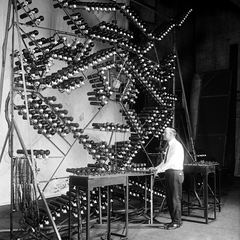
- 10Harris & Ewing. Washington, D.C., 1924.The latest in electric baseball scoreboards. George Coleman, inventor of Wash., is shown with the mechanism of the new scoreboardLibrary of Congress, Harris & Ewing collection. No known restrictions on publication.
- 11Russell Lee. Crowley, Louisiana, 1938.[Untitled photo, possibly related to: Detail of crowd watching street dance, National Rice Festival, Crowley, Louisiana]Library of Congress, FSA/OWI. No known restrictions.
- 12Russell Lee. Los Angeles, 1942.Los Angeles, California. Window shoppingLibrary of Congress, FSA/OWI. No known restrictions.
- 13National Photo Company. Washington, D.C., 1925.Crowd at star scoreboard World Series, 1925Library of Congress, National Photo Company collection. No known restrictions on publication.
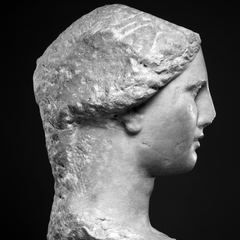
- 14Greek, Hellenistic, about 270–250 BCE. The Metropolitan Museum of Art, 2002.66.Marble head of a Ptolemaic queenThe Metropolitan Museum of Art, Open Access (CC0).
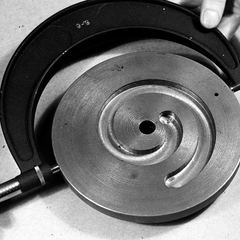
- 15Marjory Collins. New York, 1943.New York, New York. Class in the use of precision instruments, part of the government-sponsored industrial training program at New York University. Most of the students are women. Checking the outside diameter of a cast iron face cam to the nearest thousandth of an inch with a five to six inch micrometer caliperLibrary of Congress, FSA/OWI. No known restrictions.
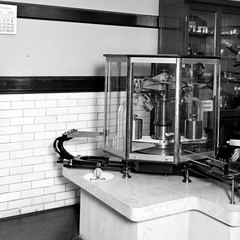
- 16National Photo Company. Washington, D.C., about 1916.Bureau of Standards, standard scalesLibrary of Congress, National Photo Company collection. No known restrictions on publication.
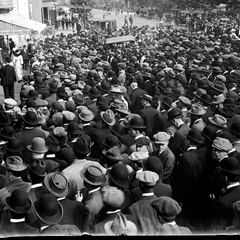
- 17Harris & Ewing. Washington, D.C., 1912.BASEBALL, PROFESSIONAL. CROWDS AT SCOREBOARDLibrary of Congress, Harris & Ewing collection. No known restrictions on publication.
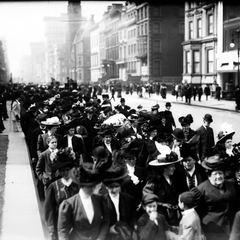
- 18Bain News Service. New York, 1908.Easter Parade [Fifth Avenue, New York]Library of Congress, George Grantham Bain collection. No known restrictions on publication.
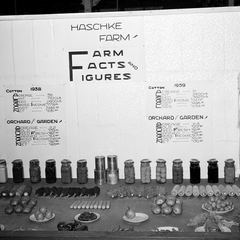
- 19Russell Lee. Gonzales, Texas, 1939.Bookkeeping is becoming an accepted part of farm life as reflected in this exhibit at the fair. Gonzales, TexasLibrary of Congress, FSA/OWI. No known restrictions.
- 20Popular Science Monthly, vol. 1, 1872.PSM V01 D477 Eye structurePublic domain.
- 21Marjory Collins. New York Times composing room, 1942.New York, New York. Composing room of the New York Times newspaper. Proofs on wall in the advertising end of the roomLibrary of Congress, FSA/OWI. No known restrictions.
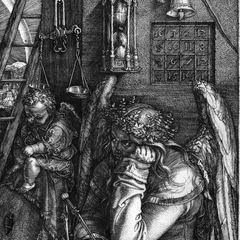
- 22Albrecht Dürer, 1514. Engraving. The Metropolitan Museum of Art, 43.106.1.Melencolia IThe Metropolitan Museum of Art, Open Access (CC0).
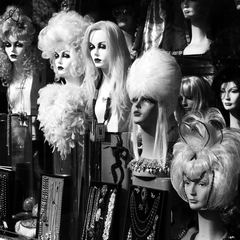
- 23Carol M. Highsmith. San Francisco. Carol M. Highsmith Archive, Library of Congress.Wig shop window in downtown San Francisco, CaliforniaLibrary of Congress, Carol M. Highsmith Archive. No known restrictions on publication.
- 24John Vachon. Chicago, 1941.Window shopping, Chicago, IllinoisLibrary of Congress, FSA/OWI. No known restrictions.
- 25John Vachon. Chicago, 1940.Department store models, Chicago, IllinoisLibrary of Congress, FSA/OWI. No known restrictions.
- 26Angelo Rizzuto. New York, 1956.[Sailors window shopping in New York City]Library of Congress, Anthony Angel Collection. No known restrictions on publication.
- 27Detroit Publishing Co. New York, about 1908.Macy's, New York, N.Y.Library of Congress, Detroit Publishing Co. No known restrictions on publication.
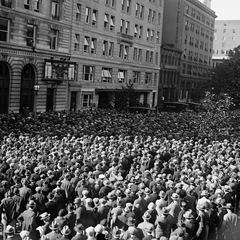
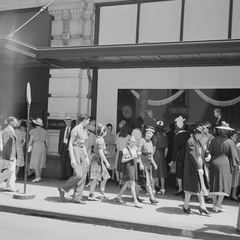
- 28Arthur S. Siegel. Detroit, Michigan, 1941.Detroit, Michigan. Crowds in front of the Crowley-Milner department store.Library of Congress, FSA/OWI. No known restrictions.
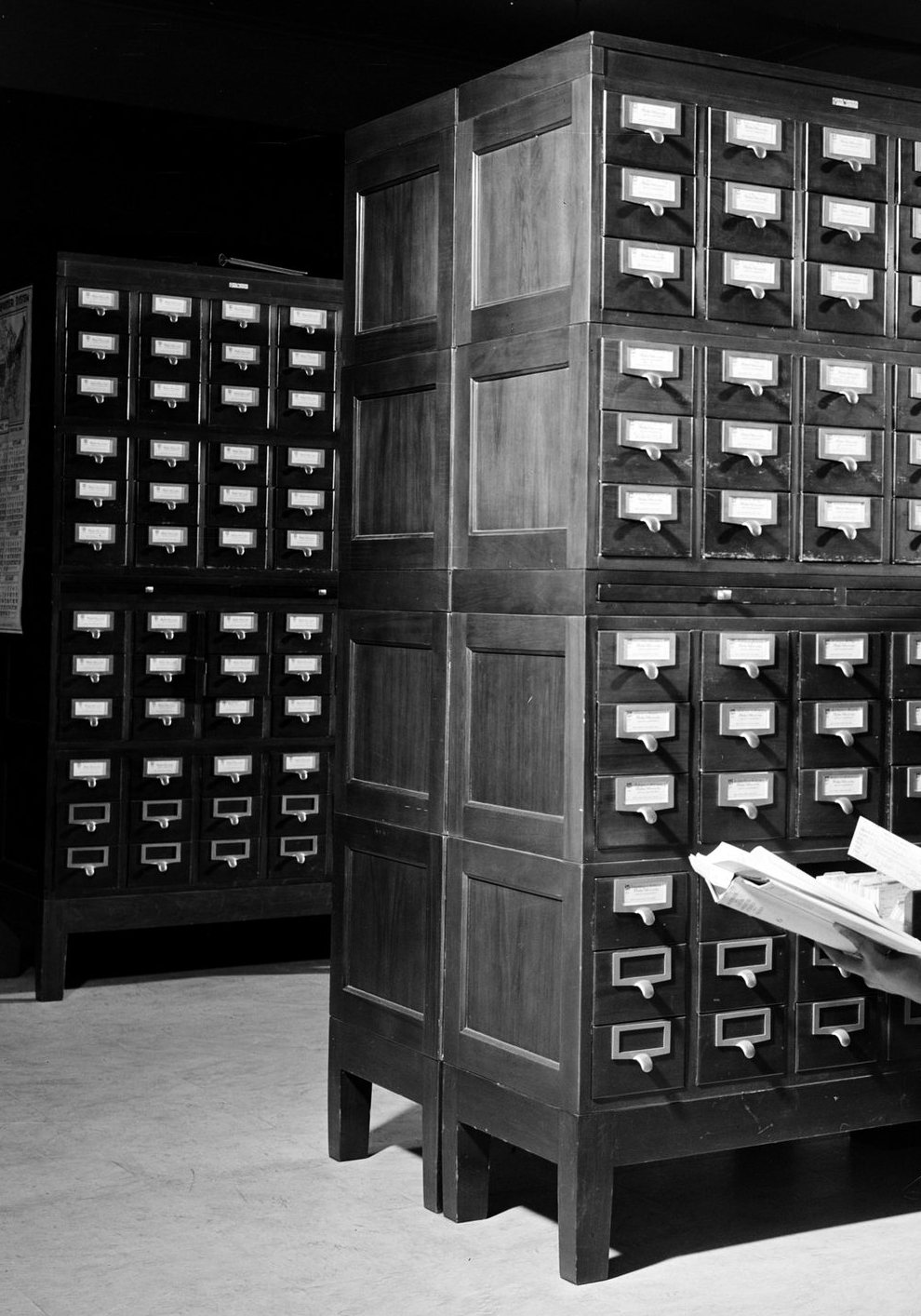
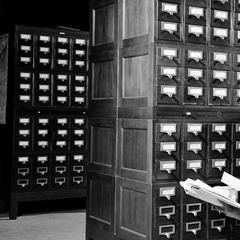
- 29Photographer unrecorded. Washington, D.C., about 1942.[… at card catalog, Library of Congress, Washington, D.C.]Library of Congress, FSA/OWI. No known restrictions.
- 30Bernard Gotfryd. New York, 1970 to 1990.[Press photographers, New York City]Library of Congress, Bernard Gotfryd collection. No known restrictions on publication.